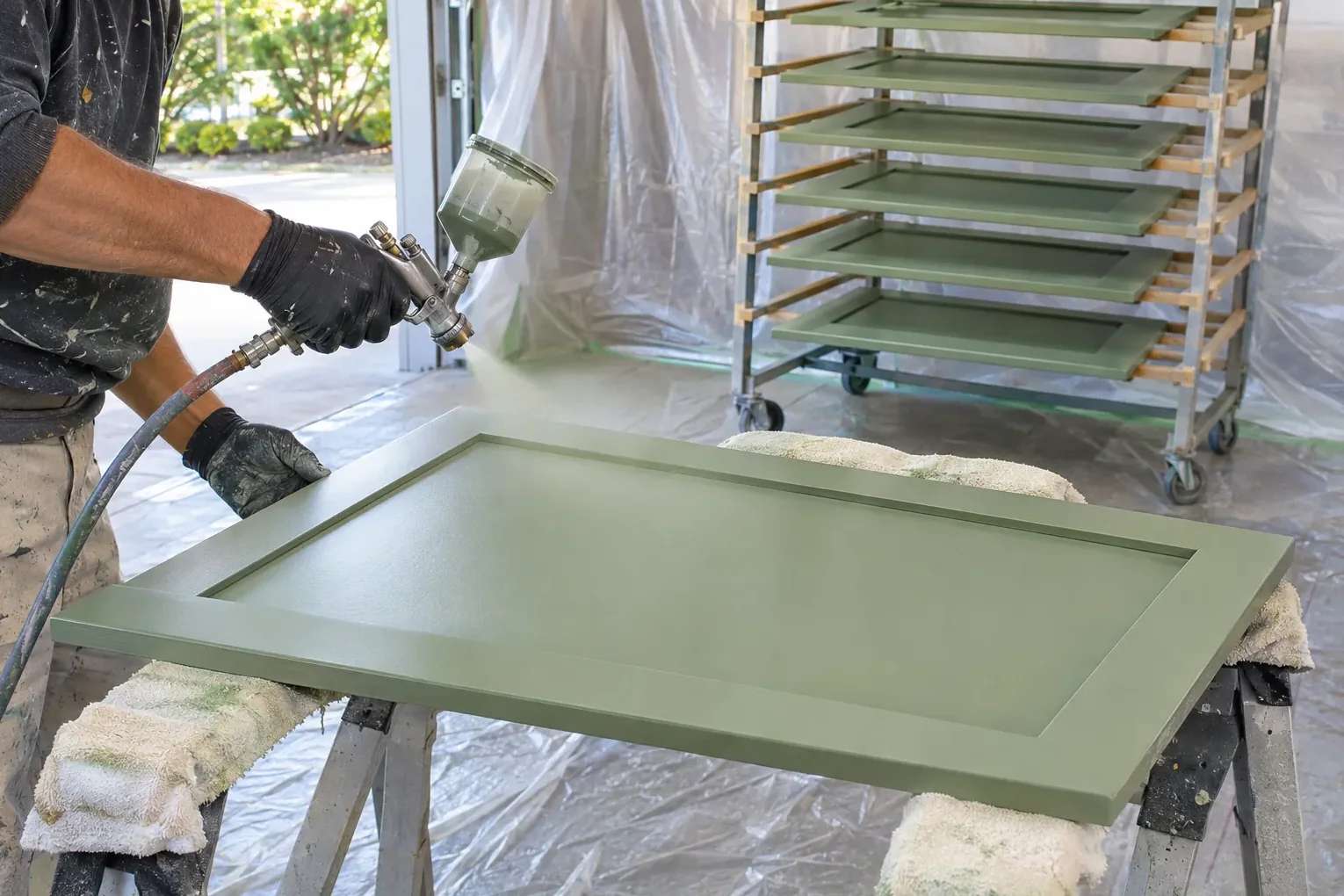
Kitchen Cabinet Painting in Rockford, IL
Get a free quote
We reply with a price. Nothing is booked until you say yes.
Updated
What to expect
Our cabinet painting service
Paint is the lightest change you can make to a kitchen. It works on sound boxes and sound doors. It does not work on peeling plastic coatings, water-swollen wood or doors that are falling apart. When the cabinets are in good shape and the color is the only problem, a paint job is the right call. When they are not, we point you to cabinet refacing or new kitchen cabinets.
Here is what a painting job with us includes:
- Doors and drawer fronts labeled, taken off and the hardware bagged by door
- Every surface degreased, rinsed and sanded so the paint grips
- Bonding primer, then enamel in thin coats
- Old hardware holes filled and sanded flush if you change the pulls
- A written price that names the primer, the enamel and the number of coats
Cabinet painting cost
Professional cabinet painting runs $425 to $1,467, with $943 as the typical job. We price by the number of doors, drawer fronts and boxes, by whether we spray or brush, and by how much prep your finish needs. More numbers are on the kitchen remodel cost page.
| Job | Range |
|---|---|
| Cabinet painting, professional | $425 to $1,467 |
| Cabinet refacing | $4,000 to $13,500 |
| Stock cabinets, installed | $100 to $300 per linear ft |
Painting is the cheapest option in that table by a wide margin. The tradeoff is that paint changes color and nothing else. The door style, the layout and the hardware holes stay as they are.
Prep decides how long paint lasts
Most failed cabinet paint jobs fail at the prep. The order is clean, degrease, sand or abrade, prime, then paint. Kitchen cabinets collect cooking grease you cannot see, and paint will not stick to it.
- Label every door and drawer, and take the hardware off. Bag the screws by door.
- Clean every surface with a degreaser, then rinse. Let it dry fully.
- Roughen the surface. Benjamin Moore's cabinet instructions say to sand all surfaces with 220 grit or coarser before priming.
- Fill dings and old hardware holes you will not reuse. Sand the filler flush.
- Prime with a bonding primer made for slick or glossy surfaces. Wood stains and knots can bleed through, so pick the primer for the wood.
- Apply the enamel in thin coats. Benjamin Moore's Advance lists a 16 hours recoat window at 77 degrees and 50 percent humidity, and cooler or damper rooms take longer.
Every paint line has its own recoat time, so we follow the can for the product we are spraying.
Spray or brush
Spraying gives the smoothest finish with no brush marks, and it is the usual method for a paid crew. It needs the doors taken off, a clean space to spray in, and masking everywhere else. Brushing and rolling with a good enamel works for a careful owner, and it leaves a slight texture. Neither method rescues bad prep. When you compare two painting quotes, ask each one how it preps, which primer and enamel it uses by name, and how many coats.
Cure time: dry is not hard
Paint feels dry long before it is hard. Benjamin Moore's Advance can take up to 30 days to reach full hardness, and its semi-gloss sheet says to wait at least 3 to 5 days before heavy abrasion or putting things back on shelves. In plain terms, you can hang the doors and use the kitchen, but go easy on them for a few weeks. Use a soft cloth and mild soap until the paint has had time.
When we recommend something other than paint
- The doors are a peeling plastic or laminate coating. Paint sits on the surface and lifts with it.
- The boxes are swollen or sagging from water. Fix that first, or replace the boxes.
- You want a different door style. Paint cannot change the shape of a door.
- The cabinets are rough or heavily chipped, and you are not willing to pay for the sanding and filling.
Lead paint in a pre-1978 kitchen
This is the part most paint ads skip. Sanding or scraping painted surfaces in a house built before 1978 can release lead dust. Anyone paid to disturb paint in such a home must be EPA lead-safe certified, including sole proprietors, and has to hand you the Renovate Right pamphlet before work starts. Illinois is not an authorized state, so EPA runs the program here. Ask any painter for the certification before you sign. If you do the work yourself, the rule is aimed at paid crews, but the dust is the same, so read the EPA pamphlet and keep kids out of the room.
Rockford has a lot of old houses: 60.3% of homes were built before 1970. Assume your cabinets may have old paint under the new.
Questions to ask any painter
- Do you spray in a shop, or in my kitchen? A shop gives a cleaner finish. In-house work needs masking and good ventilation.
- Which primer and which enamel, by name? A vague answer like good paint is a warning sign.
- How many coats, and how long between them? Rushing recoat time is a common reason for tacky doors.
- Do you paint the box faces and the frames, or only the doors and drawer fronts?
- What do you do about the old hardware holes and any dings?
- Is the firm EPA lead-safe certified, and can I see the certificate? That matters for any house built before 1978.
If you are weighing painting against doing it yourself, the honest tradeoff is time and patience. A careful owner can get a good result on a small kitchen. The work is long and mostly prep, and every shortcut shows in a year. See the DIY kitchen remodel page for where DIY stops working.
Permits and the finishing touch
The City of Rockford lists cabinets and painting as exempt finish work. Machesney Park says kitchen cabinets need no permit either. For other towns, call the village or city office. New cabinet hardware is the usual finishing step, and it is easiest to settle before we start painting. If you change the pull size, the old holes get filled and sanded in the prep stage.
Sources (9)
- Angi, cabinet painting cost
- Angi, cabinet refacing cost
- Angi, kitchen remodel cost
- Benjamin Moore, Advance Waterborne Interior Alkyd Semi-Gloss data sheet
- City of Rockford, permit FAQ
- Village of Machesney Park, permits and fees
- EPA, Renovation, Repair and Painting Program: contractors
- EPA, Renovate Right pamphlet
- U.S. Census Bureau, ACS 2020-2024 5-year, via Census Reporter
Want a straight price on yours?
Call, text a photo of the kitchen or of a quote you already have, or send the form. The price comes first, in writing.
Questions people ask
How much does it cost to paint kitchen cabinets professionally?
Professional cabinet painting runs $425 to $1,467, with $943 as a typical job. Every kitchen is priced after we see it, and the full list is on the kitchen remodel cost page.
How long does cabinet paint take to cure?
Feeling dry and being hard are different. A major paint maker says its cabinet enamel can take up to 30 days to reach full hardness, and to wait at least 3 to 5 days before heavy use. Treat the doors gently for several weeks.
Do I have to sand cabinets before painting?
The safest answer is to sand or at least abrade the surface. Benjamin Moore says to sand with 220 grit or coarser before priming. Some primer makers say sanding is unnecessary on clean, paintable surfaces, so follow the can for your product.
Is it better to spray or brush cabinets?
Spraying gives the smoothest finish and is how most paid crews work. Brushing leaves slight texture but works for a careful owner with a good enamel. Prep matters more than the method.
Can I paint over peeling or plastic-coated cabinets?
Not reliably. Paint lifts with the coating underneath it. Compare cabinet refacing or new kitchen cabinets for those doors.
Does painting cabinets in an old house need a lead-safe contractor?
If the house was built before 1978 and you pay someone to sand or scrape painted surfaces, yes. EPA requires the firm to be lead-safe certified and to give you the Renovate Right pamphlet first. Ask for the certificate.
Does Rockford require a permit to paint cabinets?
Rockford lists cabinets and painting as exempt finish work, so no. Other towns may differ, so call your village or city office if you live outside Rockford.
Keep reading
Cabinet painting: get a written price
Tell us what you want to change and your town. We reply with a price, and no work starts until you agree to it.
Prices and the full service list are on the homepage for kitchen remodeling in Rockford.