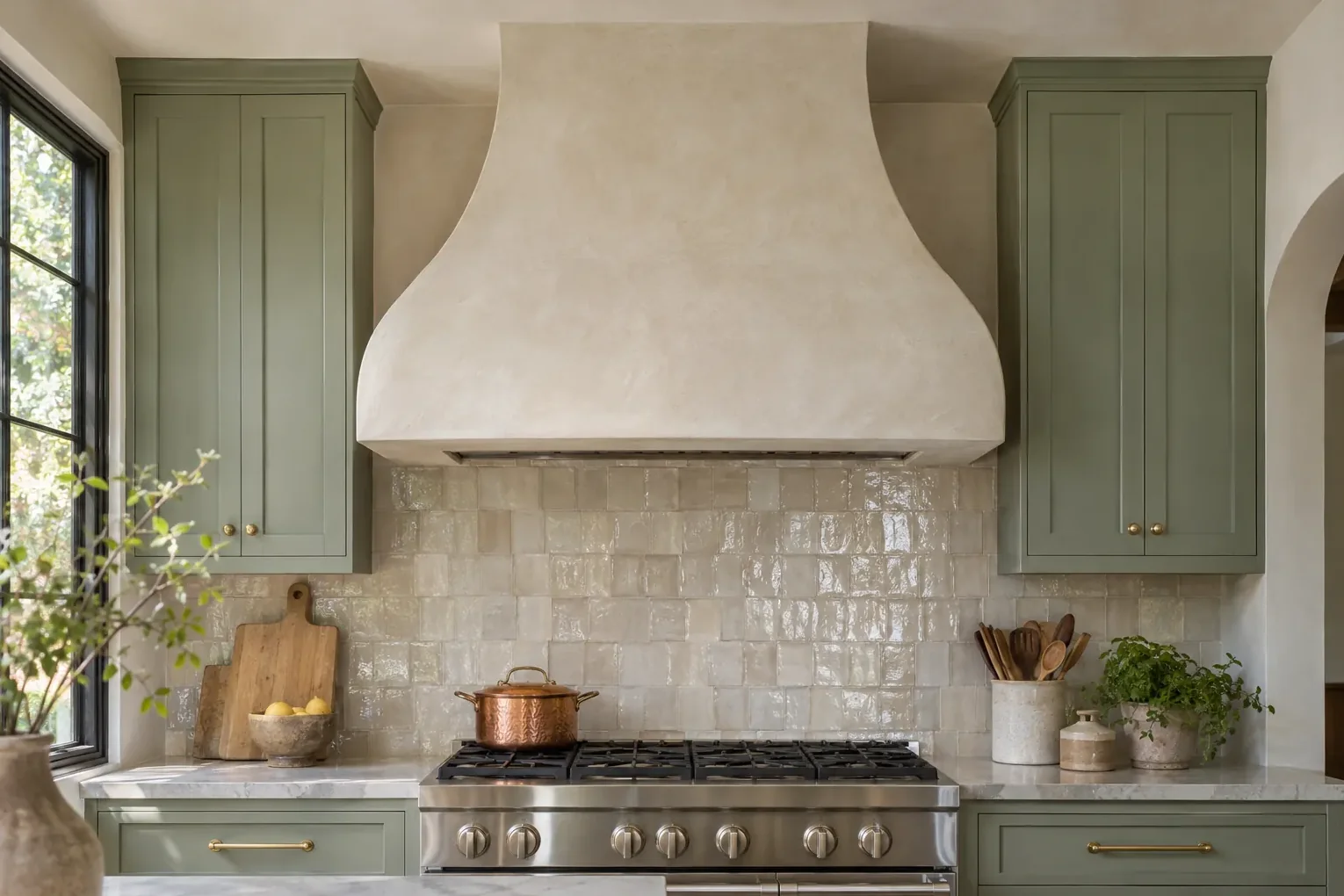
Range Hood Installation in Rockford, IL
Get a free quote
We reply with a price. Nothing is booked until you say yes.
Updated
What to expect
Our range hood installation
A range hood pulls cooking heat, grease and moisture out of the kitchen. The price depends on three things: how far the duct runs, how much air the fan moves, and whether the house can replace that air. We check all three before we quote. For the whole job, see kitchen remodel cost.
- We check the CFM rating on your hood and tell you if it needs makeup air.
- We plan the duct run: the shortest path out with the fewest bends.
- We mount the hood to framing, run the duct outside with a damper and seal the joints.
- We check the electrical connection and the clearance above your range.
- We ask the permit office whether your town wants a permit, and pull it if so.
Range hood installation cost
A range hood runs $650 to $2,500 installed, and new ductwork adds about $500. The spread is wide because the hood itself runs from a plain under-cabinet unit to a custom wall or island hood, and because installing one where the duct has to cross a ceiling or exit through a brick wall takes longer than swapping a hood on an existing duct.
| Job | Typical price |
|---|---|
| Range hood, installed | $650 to $2,500 |
| New ductwork, added | about $500 |
| Moving a gas line for the range | $375 to $750 |
| Appliance install labor, for scale | $125 to $300 per appliance |
A duct run through a finished ceiling can land outside any range, so we look at the run before we give you a number.
Vented or recirculating
A vented hood sends air outside through a duct. A recirculating, or ductless, hood pulls air through a filter and puts it back into the room. The residential code requires cooking exhaust to discharge outdoors through a duct that is smooth inside, airtight and has a backdraft damper, and it may not end in an attic, a crawl space or inside the building. The one exception is a listed and labeled ductless hood installed per the manufacturer's instructions.
- Vented takes out moisture, heat and combustion byproducts from a gas range. It costs more because of the duct.
- Recirculating is the cheaper install and the only option when the range sits on an interior wall with no way out. It catches grease and smell. It does not remove moisture or heat.
Which one your town accepts is a local call, and we ask the permit office when we pull the permit.
Makeup air for big hoods
This is the rule that catches people with a big, strong hood. The residential code requires makeup air for exhaust hood systems capable of exhausting more than 400 cubic feet per minute (CFM). The rule is about capability, not how you run it. A 900 CFM hood on low still counts as a 900 CFM hood.
The reason is backdrafting. A strong hood in a tight house can pull the house under negative pressure and draw combustion gases back down the flue of a furnace or a water heater. Makeup air means a duct or an opening that brings outside air in when the hood runs, with a damper that opens automatically.
Hoods over 400 CFM need make-up air under the residential code, and we check which edition the city enforces, since editions and local amendments differ on the details. If you are buying a hood rated above 400 CFM, talk to us before you buy, because makeup air is a duct, a damper and sometimes a heater, not a part you add at the end.
A gas range with a big hood in an older house with a natural-draft furnace or water heater is the combination that deserves a professional's look. Our old house kitchen remodel page covers what else we check behind the walls.
Duct run, size and where it exits
The duct is where the cost and the problems are. The code requires galvanized steel, stainless steel or copper for the duct, with an exception for certain downdraft systems. What we do on every run:
- Match the duct diameter to the hood's outlet. We do not shrink it to fit a joist bay.
- Use as few bends as possible. Each elbow cuts airflow, and the hood's CFM rating assumes a short straight run.
- Never end the duct in an attic, a soffit or a wall cavity. It exits outdoors.
- Run it up through the roof or out the wall nearest the range. The shortest path is the cheapest and the quietest.
Moving the range changes the duct, so we plan the hood with the layout, not after. That is covered on the kitchen layout changes page.
Permits for a range hood in Rockford and nearby towns
Rockford's mechanical permit page covers heating, ventilating and exhaust, but it does not name range hoods, so we call Building and Zoning at 779-348-7158 to ask about yours. A new duct through a wall or roof or a new gas line is more likely to need a permit than a hood swap.
The county and Loves Park publish fees that name the hood:
- Winnebago County Building Division (Roscoe, Rockton, Cherry Valley, South Beloit and the unincorporated county) charges $12 for the first kitchen hood exhaust, $6 for each additional one, and $30 for duct work. Phone (815) 319-4350.
- Loves Park charges $30 for mechanical exhaust and $30 for duct work.
Fees move, so we ask for the current schedule. The town-by-town list is on kitchen remodel permits.
What a good hood install includes
- The hood is fastened to framing or blocking, not just drywall, because hoods are heavy.
- The duct goes outside through a wall cap or roof cap with a damper, and the joints are sealed.
- The power comes from a circuit that has been checked, with the switch placed where you can reach it.
- A gas range clears the distance the manufacturer lists for the hood above the cooktop.
- Makeup air is in the plan for a hood above 400 CFM.
A hood sits next to the backsplash and the cabinets above it. If you are tiling, the order matters; see kitchen backsplash.
Types of range hood
- Wall-mounted hoods hang on the wall above a range. They are the common choice for a range against a wall.
- Under-cabinet hoods tuck under a cabinet above the range. They take little space and often come with a smaller fan.
- Island hoods hang from the ceiling above a cooktop in an island. They need a duct up through the ceiling and the roof, which is what drives the price. See kitchen island remodel.
- Microwave over the range units are a microwave with a vent fan. They can vent out or recirculate, and the fan is often smaller than a dedicated hood's.
The price range above covers all of them. The hood you pick and the duct run set where in that range you land.
Questions to ask before a hood is installed
- What is the CFM rating, and does it trigger makeup air?
- Where does the duct go, how long is the run and how many bends does it have?
- Who cuts the wall or roof, and who seals and flashes it?
- Is the electrical connection in the number, and is a permit?
- What happens to the existing hood and the old duct?
A quote that says "install hood" with one number and no duct line is the quote to send to the free quote check.
Keeping the hood working
Grease filters need cleaning, and a hood with a clogged filter moves less air than its rating. Follow the manufacturer's instructions for the filter and, on a recirculating hood, replace the charcoal filter on its schedule. A hood that rattles or sounds like it is working hard often has a duct or a damper problem more than a motor problem.
Sources (10)
- Angi, range hood installation cost
- HomeAdvisor, kitchen remodel cost
- Angi, kitchen remodel cost
- ICC, 2015 IRC chapter 15, M1503.4 Makeup air required
- ICC code change proposal quoting IRC M1503.4
- ICC, 2018 IRC chapter 15 Exhaust Systems
- InterNACHI, inspecting the kitchen exhaust
- City of Rockford, Mechanical and Plumbing Permits
- Winnebago County building fee schedule (2016)
- City of Loves Park, permit fee schedule (effective 2/15/2018)
Want a straight price on yours?
Call, text a photo of the kitchen or of a quote you already have, or send the form. The price comes first, in writing.
Questions people ask
How much does it cost to install a range hood?
$650 to $2,500 installed, plus about $500 when new ductwork is run. A hood on an existing duct sits at the low end. See kitchen remodel cost for the whole job.
Does a range hood have to vent outside?
The residential code says cooking exhaust discharges outdoors through a duct, with an exception for listed and labeled ductless hoods installed per the manufacturer. Which one your town accepts is a local call, and we ask the permit office.
When do I need makeup air for a range hood?
The International Residential Code requires makeup air for exhaust hood systems capable of exhausting more than 400 CFM. The section is numbered M1503.4 in the 2015 edition, and other editions renumber it and change the exceptions. We check which edition the city enforces.
Do I need a permit to replace a range hood?
It depends on the town. Winnebago County charges $12 for a kitchen hood exhaust permit and Loves Park charges $30 for mechanical exhaust. Rockford's mechanical page does not name range hoods, so call Building and Zoning at 779-348-7158 to ask about yours.
Can I use a ductless range hood instead of venting outside?
A recirculating hood is accepted by the code only if it is listed and labeled and installed per its instructions. It removes smell and some grease, but it does not remove moisture or heat. A gas range is the stronger case for a vented hood.
How much CFM do I need for my range?
It depends on the range, the duct run and the house. The manufacturer's guide for the hood and the range, plus a look at the duct run, give the answer. Anything over 400 CFM triggers makeup air under the residential code.
Can a homeowner install a range hood?
Mounting a hood is within reach of a skilled homeowner. The duct, the electrical connection and any gas work are where permits and inspections apply. See diy kitchen remodel for where DIY stops working.
Keep reading
Range hood installation: get a written price
Tell us what you want to change and your town. We reply with a price, and no work starts until you agree to it.
Prices and the full service list are on the homepage for kitchen remodeling in Rockford.