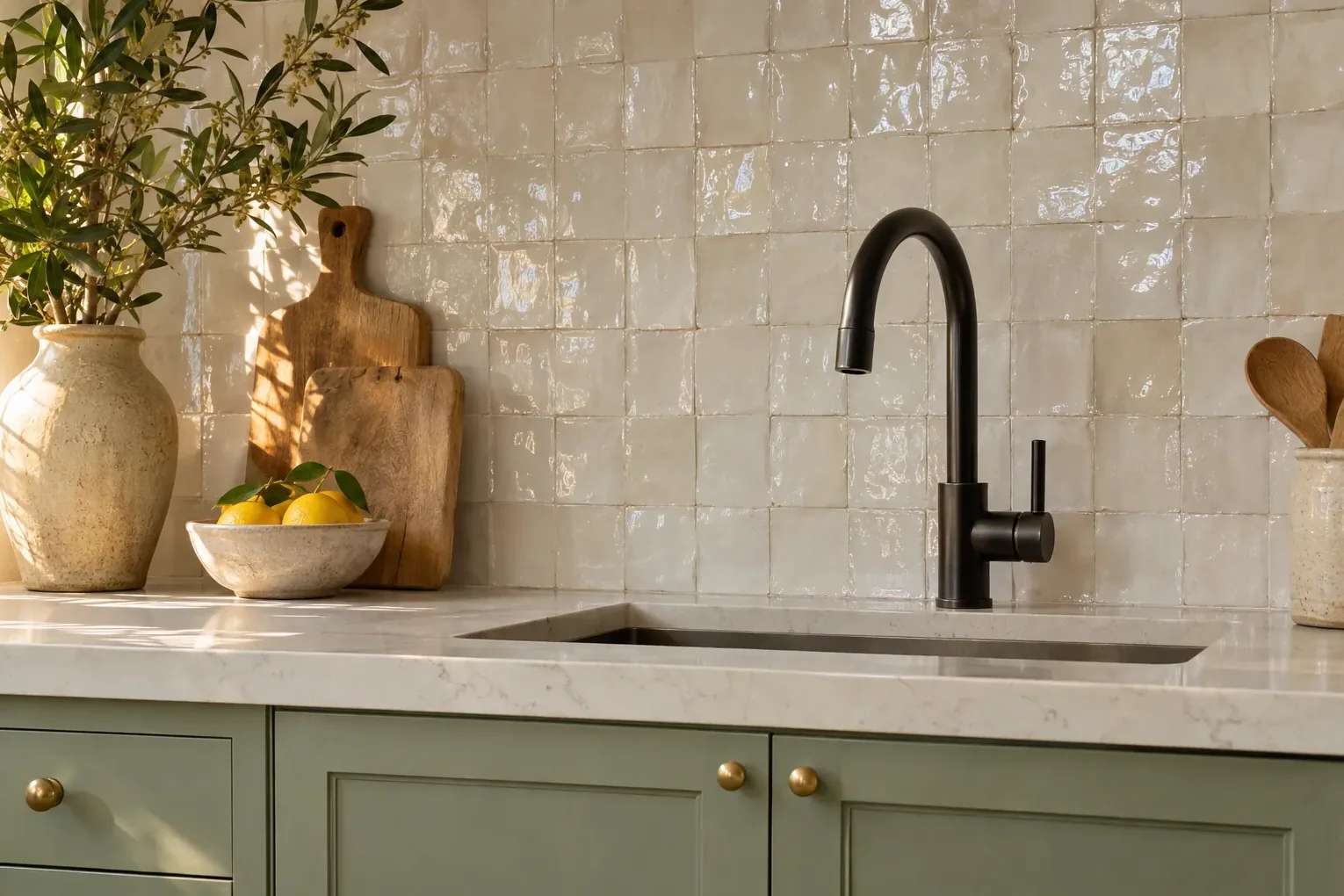
Kitchen Backsplash in Rockford, IL
Get a free quote
We reply with a price. Nothing is booked until you say yes.
Updated
What to expect
Our backsplash installation service
The backsplash is the strip of wall between the counter and the upper cabinets. It is one of the cheapest ways to change how a kitchen looks. Here is what a backsplash job with us includes:
- Measuring the wall and laying out the pattern from the center of the focal wall
- Prepping the wall: patching and priming the drywall
- Extending the outlet boxes so they sit at the face of the finished tile
- Setting the tile, grouting and sealing, with flexible caulk where tile meets the counter
- Finishing windows, open ends and the corners so nothing stops in mid-air
- A written price that says what is in it: tile, setting materials, grout and caulk
Kitchen backsplash cost
A typical tile backsplash runs $500 to $1,500 for the whole job, or $15 to $40 per sq ft installed. The area is small, so labor, cuts and trim matter more than the tile price itself. The kitchen remodel cost page puts it next to the other lines.
| Item | Installed cost |
|---|---|
| Typical tile backsplash, whole job | $500 to $1,500 |
| Tile backsplash, per sq ft | $15 to $40 per sq ft |
| Slab backsplash cut from the counter stone | priced with the counter, see the stone pages |
| Peel-and-stick or panel | priced per job |
Tile, slab or panel
- Tile. Ceramic, porcelain, glass or stone tile in a set pattern. This is the standard, and the numbers above are for it. Grout lines collect grease, so a smaller joint and a stain-resistant grout are worth it.
- Slab. The same stone as the counter, run up the wall. It has no grout lines and wipes clean. It is priced with the counter: see quartz countertops and granite countertops. A slab behind the range is the cleanest option.
- Panel or peel-and-stick. The cheapest to install and the easiest to replace. Behind a gas range, check the product's heat rating first.
The layout details that change the job
Outlets. Tile around an outlet needs the box to sit at the face of the finished wall. Thicker tile can leave the box recessed, which is a code problem and a shock risk, so we add box extenders. Moving an outlet to a better spot is more work, and one outlet move typically runs $220. Rockford lists receptacle replacement as exempt, and moved wiring is not on the exempt list, so we check with the city first.
Windows. A window over the sink means the tile has to wrap the sill and the return. We decide the trim before the tile goes up. Where it stops. A backsplash that ends in mid-air on a side wall looks unfinished. We run it to the end of the cabinet run or to a corner.
Height. The standard stops at the bottom of the upper cabinets, and a full-height run up to the ceiling behind a range hood is a design choice that adds tile. See range hood installation for that wall.
Choosing tile for a backsplash
Smaller tiles mean more grout lines, which means more to clean behind the range and the sink. Larger tiles show fewer lines and install faster, but need a flat wall. A glossy tile bounces light and shows splatter. A matte or textured one hides it but can hold grease. Glass tile is easy to wipe. Natural stone tile usually needs sealing. For a kitchen where people cook, choose the surface you are willing to wipe once a week and then pick the color. Buy a bit more than the measured area for cuts and breakage, and keep a few spare tiles in the garage for a future repair, because a discontinued pattern cannot be matched.
Matching the backsplash to the counter
With stone counters, the backsplash can be a short stone lip, a full-height slab or tile. A four-inch stone lip is the cheapest way to stop water at the wall and is cut from the same piece as the top. A tile backsplash adds color and pattern and is the one part of the kitchen you can change later without touching the counter. With laminate or butcher block, tile is the usual choice. Pick the counter first, then lay the tile samples next to it in the same light. The countertops page shows how each material comes together, and butcher block countertops covers the wood case, where the joint at the wall must stay flexible.
Order of work
The backsplash goes on after the countertops are installed, because the tile sits on or against the top. That makes it one of the last jobs. The counter gets templated before the tile is chosen, since the template and the tile depth both affect the gap. In a remodel with new cabinets, wall prep (patching and priming the drywall) comes first, then tile, then grout, then sealing and caulk at the counter edge.
How we prep the wall
- Power to the outlets on that wall goes off before we start, and the boxes are covered.
- We patch and prime the wall. Tile cannot hide a rough or damaged surface, and bad drywall is the usual cause of a failed job.
- We mark a level line and a centerline, and start the layout at the center of the focal wall, often behind the range, so cuts at both ends are even.
- We dry-fit the pattern on the counter first and check the cuts at outlets and windows.
- The adhesive cures before grouting and the grout before sealing, following the labels.
Keeping it clean behind the range
The wall behind a range takes grease and heat, so the surface matters more there than anywhere. A slab or a large-format tile has fewer joints to clean. If you use small tile, choose a grout that resists stains, and seal it if the maker says to. The range and hood clearances are set by the appliance, not the tile, so we check them before we finish the wall. The kitchen lighting page covers under-cabinet lights, which sit right above the backsplash and show every imperfection in the tile and grout, so a good layout pays off there.
Under-cabinet lighting is easiest to plan before the tile, so the wire has a route. We ask the electrician where the cable comes out and whether the tile will cover the transformer or switch, so nobody cuts finished tile later.
DIY or hire it
A backsplash is one of the friendliest jobs for a careful owner: small area, forgiving layout if you plan the centerline, and no plumbing. The hard parts are straight lines, cuts around outlets, and a patient grout day. The DIY kitchen remodel page covers where DIY works and where it stops. A stone slab behind a range or a complicated pattern is where an installer earns the price.
What to settle before we start
- Whether the price includes the tile, the setting materials, the grout and the caulk, or only labor.
- Who patches and primes the wall, and who handles the outlet boxes.
- Where the backsplash starts and stops, and how it is finished at windows and open ends.
- Whether there is a minimum charge for a small job.
- How trim pieces and edge tile are priced, and the cost of extra tile for cuts.
Permits
Rockford lists tile as exempt finish work. Wiring changes for outlets are a different matter, so we confirm with the city. The kitchen remodel permits page has each town's office. Floors are on the kitchen flooring page.
Want a straight price on yours?
Call, text a photo of the kitchen or of a quote you already have, or send the form. The price comes first, in writing.
Questions people ask
How much does a kitchen backsplash cost?
A typical tile backsplash runs $500 to $1,500 for the whole job, or $15 to $40 per square foot installed. Your price comes after we measure. See kitchen remodel cost.
Do I need a permit for a backsplash in Rockford?
Rockford lists tile as exempt finish work. Moving an outlet or wiring is electrical work that is not on the exempt list, so we ask the city. See kitchen remodel permits.
Should the backsplash or the countertop go in first?
Countertop first. The tile sits against the finished top, and the template needs clean cabinet and wall lines. The backsplash is usually one of the last jobs.
What do I do about outlets in a tile backsplash?
Outlet boxes must sit at the face of the finished wall, so thick tile may need box extenders. Moving an outlet costs more, and one outlet move typically runs $220. An electrician handles any wiring change.
Is a stone slab backsplash better than tile?
It has no grout lines, so it wipes clean, and it matches the counter. It is priced with the counter stone, so ask us for the number. Tile costs less and is easier to change later.
Can I install a backsplash myself?
Often, yes. It is small, has no plumbing, and tools are cheap. Plan a centerline, cut carefully around outlets, and caulk the counter joint. See DIY kitchen remodel.
Keep reading
Backsplash: get a written price
Tell us what you want to change and your town. We reply with a price, and no work starts until you agree to it.
Prices and the full service list are on the homepage for kitchen remodeling in Rockford.